72/100 · weighted toward human outcomes
GEAR LAB / LIGHT / RED & NEAR-INFRARED LIGHT
ModerateMedium complexity
Red & near-infrared light
Dose the tissue—not the marketing claim.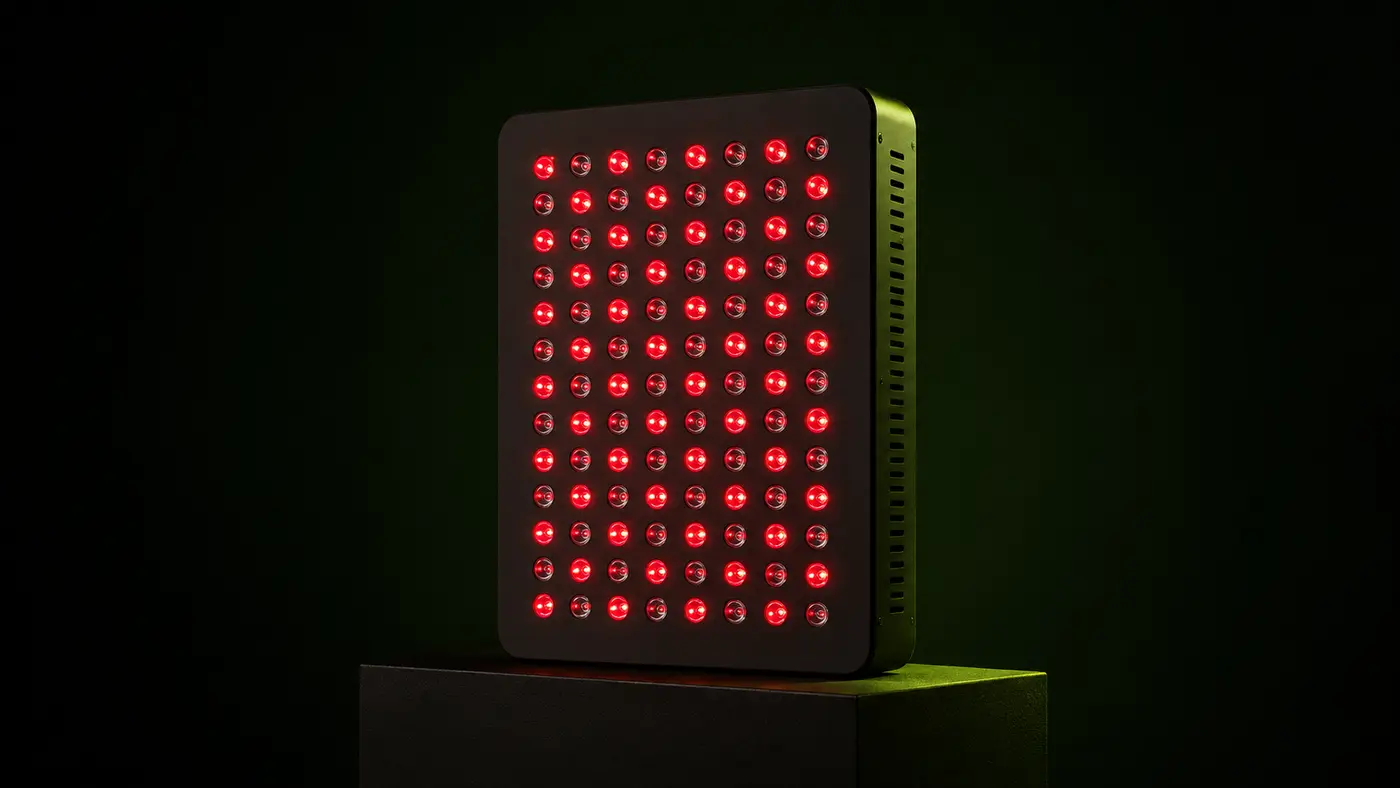
THE SHORT ANSWER73/100MODERN BIO FIT SCORE
Photobiomodulation uses red and near-infrared wavelengths to deliver light energy to tissue. Human evidence is most credible for selected skin, hair, wound, oral-mucositis and pain applications; effects depend on wavelength, irradiance, distance, time and the condition being treated.
HOW TO USE THIS PAGE
Use the guide before you use the checkout button.
- 01Check the evidence
See which outcomes are supported and where the marketing runs ahead of the data.
- 02Try the protocol
Understand dose, frequency, setup and what you would actually track.
- 03Compare the real cost
Review specifications, safety, maintenance and the shortest responsible shortlist.
THE DECISION PASSPORT
See the whole tradeoff.
LAST REVIEWED
JULY 2026
Does it change a meaningful decision or repeated behavior?
Benefit relative to total ownership cost
Setup, time, comfort and maintenance burden
2 shortlisted paths · 4 direct sources
See recommendations ↓The Modern Bio Fit Score is an editorial decision aid, not a validated clinical scale. A low general score can still hide a strong use for a narrow medical indication.
01 / BENEFITS, GRADED
What the evidence actually supports.
Skin appearance
Small randomized trials using defined red/NIR protocols report improvements in fine lines, elasticity or hydration. Results are gradual, device-specific and smaller than advertising often suggests.
Pattern hair loss
Several trials support low-level light devices as an adjunct for androgenetic alopecia. It does not replace diagnosis or proven medical options, and photographs should be standardized before judging change.
Exercise soreness and pain
Some protocols reduce soreness or improve short-term function, but dose, timing and body area vary considerably. A panel should not delay evaluation of persistent pain or injury.
Clinical wound and oral care
Specialist photobiomodulation has established clinical uses in selected settings. A consumer panel is not interchangeable with a clinician-delivered device or treatment plan.
THE EVIDENCE BOUNDARY
What has not been established.
- A universal full-body dose
- Meaningful fat loss from light alone
- Cancer treatment
- A proven testosterone or longevity effect
- That more irradiance or more wavelengths always produces a better result
02 / PRACTICAL PROTOCOL
Start low. Change one variable. Keep the signal.
Use the manufacturer's measured distance and the shortest recommended session for one target area.
If reliable irradiance is supplied, calculate energy density: mW/cm² × seconds ÷ 1,000 = J/cm². Treat manufacturer readings as estimates unless independently measured.
Increase only one variable after two weeks. Stop escalating if redness, headache, eye discomfort or symptom aggravation appears.
Use the same lighting, angle and outcome measure. Hair protocols often need longer. Stop if there is no meaningful signal.
YOUR MINI-DASHBOARD
Track only what can change the decision.
- Target-area photo under identical lighting
- Pain or soreness on a 0–10 scale
- Session distance and duration
- Skin reaction for 24 hours
- The outcome that justified buying it
03 / BUYING GUIDE
The specifications that matter.
- Published wavelengths rather than vague 'medical grade' language
- Irradiance reported at realistic treatment distances
- Large enough treatment area to keep sessions practical
- Independent electrical-safety certification for your market
- Timer, separate red/NIR controls and stable mounting
- At least a 30-day return window and a multi-year warranty
- A repeatable skin or hair adjunct
- Targeted recovery when a simple protocol can be measured
- People likely to use a mounted panel consistently
- You want one device to solve many unrelated conditions
- You take photosensitizing medication without clinical clearance
- The vendor will not publish distance-specific output
04 / MODERN BIO SELECT
The shortlist—not the shelf.
We rank for fit, evidence, usable specifications, ownership cost and safety. No company can buy a position. Prices are snapshots and may change; always confirm current terms on the seller or facility site.
BEST START01
MitoPRO 300X
About $449Enough panel to learn whether the habit earns a permanent place.
- BEST FOR
- Face, scalp and targeted recovery
- WHY IT MADE THE LIST
- Six disclosed wavelengths
- Separate red/NIR control
- 60-day trial and 3-year warranty
- WATCH FOR
- Coverage is limited; full-body use becomes slow.
BEST DAILY DRIVER02
MitoPRO 750X
About $749The practical size step-up for larger body areas without buying a wall.
- BEST FOR
- Torso, legs and shared home use
- WHY IT MADE THE LIST
- Better coverage-to-cost balance
- Published wavelength mix
- Mounting ecosystem and same trial terms
- WATCH FOR
- Confirm current irradiance at your intended distance; brand measurements are not a clinical dose.
Commerce note: outbound product links may later become affiliate links. That can support this publication, but it will never change the verdict, evidence grade or order.
05 / SAFETY & STOP RULES
Know when the experiment ends.
- 01
Protect or close eyes as directed; near-infrared is invisible but still reaches the eye.
- 02
Ask a clinician about photosensitizing drugs, active skin disease, pregnancy or treatment near a known tumor.
- 03
Do not place the panel closer or run it longer simply because warmth feels good; photobiomodulation can have a biphasic dose response.
EDUCATIONAL, NOT PERSONAL MEDICAL GUIDANCE
Age, pregnancy, diagnoses, medications, implanted devices and the exact product can change risk. Product marketing is not a substitute for instructions from a qualified clinician who knows your history.
06 / SOURCE PACK
Open the record yourself.
01
Peer-reviewed review · 2024Photobiomodulation: clinical applications review
↗02Systematic review · 2021Photobiomodulation for hair loss
↗03Human clinical study · 2025Home red/NIR LED skin trial
↗04Manufacturer specificationMitoPRO X specifications and warranty
↗A source supports only the conclusion described in this guide—not every claim attached to the technology. Manufacturer pages are used for specifications, price and warranty, never as sole proof of a health outcome.
THE MODERN BIO BRIEF